


Joe Delfgauw did not begin his affiliate marketing career with investors, a polished business plan, or a comfortable bank balance. He began with about $600, a motorcycle as his only vehicle, and a $99 trade show ticket that swallowed a huge share of his savings. The rest of the story involves a borrowed car, a long drive, and a night spent sleeping in a parking spot instead of a hotel room.
It is the kind of origin story that makes people slightly uncomfortable, mostly because it removes every familiar excuse about money, equipment, and timing. He got himself into the right room, met the right people, asked questions, and treated a small opportunity like it mattered. That decision helped launch his path into affiliate marketing, and he says he would do it all over again. Here is what happened, why it worked, and how you can apply the same thinking to your own start.
Table of Contents
- Bootstrapping Strategies: The $600 Reality Behind His Start
- Networking Events: The $99 Trade Show That Changed Everything
- In-Person Networking: Why the Right Room Beats a Bigger Budget
- Performance Marketing Success: Lessons From Joe Delfgauw’s Affiliate Marketing Journey
- Entrepreneurial Resilience: Would He Do It Again?
- Affiliate Marketing Guide: How to Apply His Approach to Your Own Start
- Traffic Arbitrage and Media Buying: Scaling Performance Channels
- Affiliate Marketing Career: Final Thoughts
Joe Delfgauw is an affiliate marketer and entrepreneur whose path into the industry started from a position most people would call hopeless. There was no funding behind him, no industry contacts, and no formal plan in a drawer. Instead of hiding that history, he shares it openly, which is a large part of why his story keeps circulating among beginners.
Affiliate marketing, for anyone new to the term, is a model where publishers earn commissions by promoting other companies’ products through tracked links. It is a serious business, and Statista reports that affiliate marketing spending in the United States has grown into the billions of dollars annually. If you are new to the model, a solid guide to affiliate marketing for beginners can fill in the fundamentals quickly.
What separates his story from standard startup folklore is the scale of the numbers. No seed round. No family loan. No savings cushion from a previous career. There was $600, a $99 ticket, and a decision. Small numbers, big consequences.
Across the performance marketing sector, many founders boast about advanced technical certifications or privileged industry pedigrees before launching their campaigns. Joe Delfgauw approached the discipline from an entirely empirical stance, relying on raw market testing rather than conventional business theories. His background demonstrates that personal resourcefulness, relentless focus, and a willingness to master conversion rate optimization often surpass pure financial advantages.
Today, Delfgauw stands out as a practical blueprint for digital media buyers who want to break into performance networks without institutional backing. His journey underlines that sustainable affiliate commission generation does not demand complex infrastructure during the early stages of business formation. Instead, mastering search intent, partner negotiations, and conversion funnels allows ambitious publishers to carve out lucrative niches in competitive spaces.
Key Takeaways
- Joe Delfgauw started affiliate marketing with about $600, no investors, and no formal business plan.
- He spent $99, roughly one-sixth of his total funds, on a trade show ticket in New York.
- He borrowed his ex’s car for the drive from Michigan and slept in it because a hotel was out of reach.
- He credits that trip with putting him on the path into affiliate marketing and says he would do it again.
Bootstrapping Strategies: The 0 Reality Behind His Start

Most digital entrepreneurs talk about bootstrapping, but the actual reality often involves substantial personal credit lines or parental fallbacks. In contrast, Joe Delfgauw faced a situation where six hundred dollars represented absolute liquidity and financial margin. Having solely a motorcycle for transport made long-distance interstate travel impossible during unpredictable seasonal weather.
A precarious bank balance forces a founder to distinguish rapidly between theoretical knowledge and practical execution. When capital is that scarce, buying expensive training courses or premium software subscriptions ceases to be an option. Instead, one must rely entirely on personal initiative, conversational networking, and direct observation of operational industry models.
He understood early that preserving the money would only prolong his current financial distress rather than solve it. Spending nearly one-sixth of his liquid net worth on event admission was an extreme risk that demanded immediate action. That decisive commitment shifted his mental framing from passive observer to active participant within the affiliate ecosystem.
Financial scarcity strips away the luxury of overthinking, directing every remaining dollar toward actions that yield quantifiable, real-world data. When prospective publishers explore performance marketing channels, many squander critical capital on superficial assets like logos, expensive business cards, and complex custom websites. Delfgauw recognized that direct market engagement provided the only genuine defense against ongoing insolvency and stalled entrepreneurial progress.
By treating his meager six hundred dollars as working venture capital, he avoided the common paralysis that derails early-stage ventures. He eliminated superfluous discretionary expenses, channelled his focus on raw industry mechanics, and accepted short-term discomfort as an operational cost. That intense clarity of purpose turned an acute financial constraint into a lasting strategic advantage that directed his commercial choices.
Networking Events: The $99 Trade Show That Changed Everything
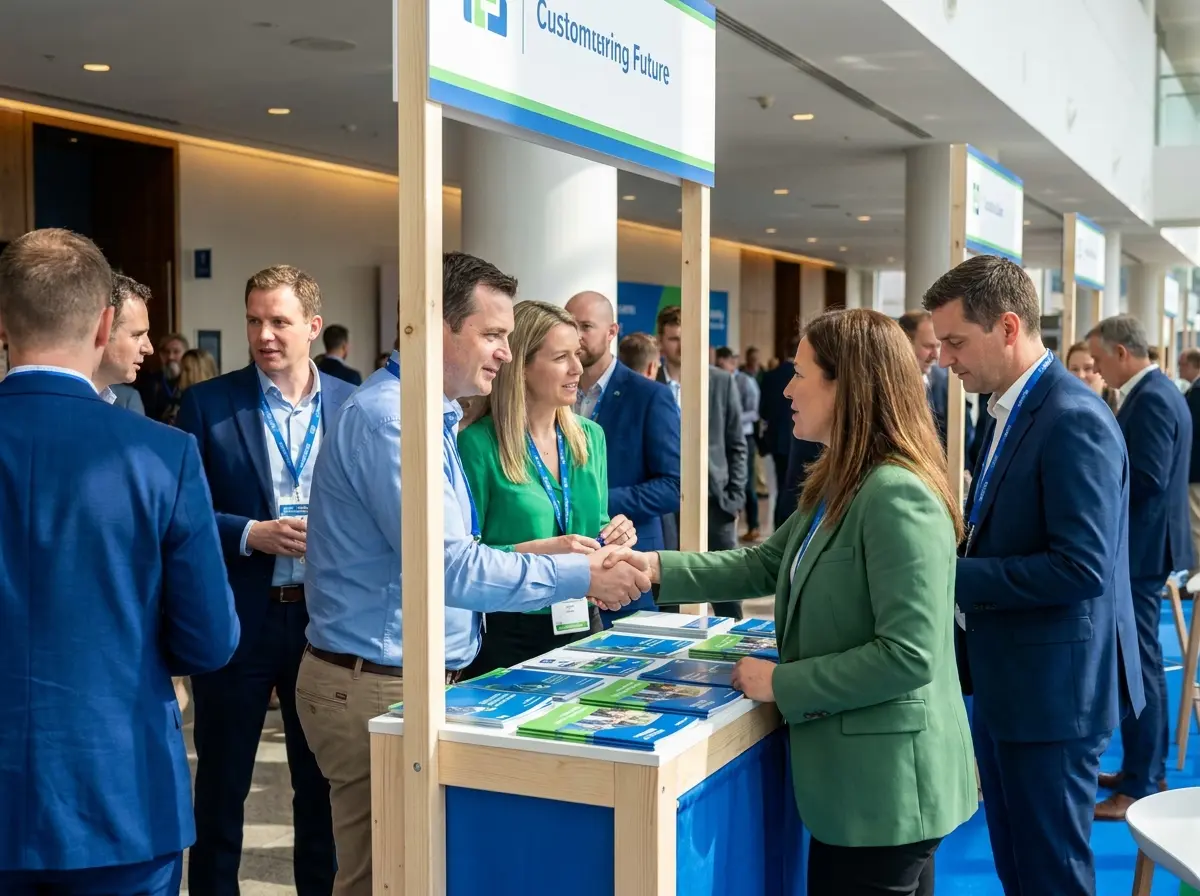
The event in question took place in New York City, hundreds of miles away from his starting point in Michigan. Driving an open motorcycle through varying weather conditions across several states was practically impossible, requiring a creative transportation solution. Delfgauw reached out to his former partner, secured permission to borrow her car, and calculated every gallon of fuel meticulously.
Accommodations in Manhattan were entirely beyond his fiscal reality, where a single night at a basic hotel exceeded his remaining budget. His solution was unapologetically utilitarian: park the vehicle in an accessible area and spend the night sleeping in the passenger seat. While unglamorous, this sacrifice eliminated lodging expenses and ensured he arrived at the exhibition hall refreshed and ready.
Walking across the convention floor, he made a conscious choice not to pretend to be an established industry titan. Rather than pitching nonexistent traffic volume, he approached exhibitor booths, asked incisive questions, and paid close attention to experienced affiliate managers. Understanding how networks structure commercial agreements allowed him to identify high-value opportunities before committing scarce operational hours.
Industry trade shows often intimidate newcomers because established agencies showcase expansive booths and boast about massive campaign volume. Rather than competing on vanity metrics, Delfgauw positioned himself as a diligent partner focused on driving clean, compliant traffic. This pragmatic posture earned immediate trust from network representatives who regularly deal with exaggerated claims from unreliable affiliates.
By engaging directly with network managers, he gathered unvarnished insights into offer payout floors, tracking parameters, and high-converting offer verticals. Understanding specific advertiser pain points helped him realize which CPA networks offered flexible payment thresholds for high-performing publishers. Those conversations effectively replaced months of speculative trial and error, delivering concrete commercial intelligence right at the trade show floor.
In-Person Networking: Why the Right Room Beats a Bigger Budget
Aspiring internet marketers often believe that capital precedes progress, spending months saving funds before attempting to run their first campaign. Yet industry experience consistently demonstrates that access to actionable intelligence and genuine relationships creates significantly more leverage than modest ad budgets. Discovering effective affiliate campaigns often requires understanding strategic positioning rather than just spending large sums on testing.
Inside the conference hall, Delfgauw observed top publishers discussing conversion funnels, payout negotiations, and traffic arbitrage in real time. These informal discussions revealed practical insights that were nowhere to be found in generic public forums or speculative blog entries. By listening attentively, he uncovered which promotional verticals were expanding and which legacy business models were rapidly decaying.
Moreover, establishing direct personal rapport with affiliate managers altered his commercial trajectory instantly. Account representatives frequently allocate better payouts, customized creative assets, and quicker payment terms to affiliates whom they have met in person. Those institutional concessions drastically reduce operational overhead, giving undercapitalized operators a genuine competitive advantage against distant, anonymous competitors.
The value of relational equity cannot be overstated when navigating the complexities of modern digital marketing networks and platforms. Strategic connections provide early notifications about impending merchant shifts, creative fatigue patterns, and emerging regulatory requirements across targeted geographic markets. That proprietary visibility shields proactive marketers from severe cash drawdowns that frequently eliminate poorly connected competitors during unexpected algorithm changes.
Furthermore, strong merchant relationships unlock private affiliate networks that remain entirely hidden from standard public directories and affiliate search engines. These invite-only arrangements regularly feature higher conversion rates, exclusive landing page designs, and rapid daily payment terms for dependable affiliates. For Joe Delfgauw, securing access to these elite partnership agreements validated the strategic decision to prioritize direct physical networking over passive online research.
Performance Marketing Success: Lessons From Joe Delfgauw’s Affiliate Marketing Journey
The practical path carved by Joe Delfgauw offers several pragmatic takeaways for digital operators entering competitive performance channels today. First, resource constraints should serve as a forcing function for radical focus rather than an excuse for ongoing stagnation. When you lack the budget to make multiple expensive mistakes, you naturally vet each operational tactic with rigorous precision.
Second, geographical and logistical friction can be solved through unconventional methods if personal pride is set aside. Choosing an uncomfortable night in an automobile over missing an essential business gathering illustrates the standard of commitment required. According to research published by Harvard Business Review, resourcefulness and situational awareness consistently outshine static resources when pursuing difficult entrepreneurial goals.
Third, genuine curiosity is the ultimate equalizer when networking alongside seasoned professionals who possess far greater economic resources. Delfgauw did not attempt to impress delegates with fabricated credentials; he demonstrated intense enthusiasm and a willingness to master technical mechanics. Industry leaders are remarkably receptive to disciplined newcomers who exhibit hunger, integrity, and a clear dedication to producing verified commercial results.
Fourth, real operational capability comes from testing ad creatives, dissecting user funnels, and managing direct attribution tracking platforms. Many prospective performance publishers fail because they consume affiliate marketing courses passively without deploying live conversion campaigns in production environments. Delfgauw avoided this failure mode by converting theoretical insights into real marketing campaigns immediately following his return from New York.
Finally, mastering commercial leverage demands a transparent appreciation of risk management and return on ad spend metrics. Digital advertising networks will ruthlessly penalize undisciplined budgets, making strict fiscal tracking indispensable for sustainable multi-year operational profitability. Delfgauw’s origin story reminds modern operators that tactical discipline, emotional grit, and calculated risks form the true cornerstones of enduring entrepreneurial independence.
Entrepreneurial Resilience: Would He Do It Again?
Whenever veteran performance marketers reflect upon their early struggles, hindsight often softens the memory of acute physical exhaustion and anxiety. Yet when asked whether he would repeat that arduous trip, Joe Delfgauw consistently affirms that he would do it without hesitation. The personal resilience forged through those austere conditions proved far more lucrative over his career than an easy initial start.
Encountering early hardship insulates an entrepreneur against future market volatility, policy changes, and sudden industry disruptions. Having operated successfully from the passenger seat of an old car, future setbacks in online advertising appear minor and easily solvable. That psychological grounding transforms how an operator responds to structural challenges as affiliate marketing programs mature and evolve over time.
Additionally, the venture validated an essential principle: dramatic inflection points in business typically trace back to an uncomfortable personal gamble. Had he guarded his remaining six hundred dollars cautiously at home, his eventual entry into digital publishing would have stalled. Taking measured, asymmetric bets remains a hallmark of long-term commercial outperformance across competitive online marketing landscapes.
When digital advertising channels undergo platform updates or compliance adjustments, less resilient media buyers routinely exit the market entirely. Having confronted absolute fiscal constraints at the start of his career, Delfgauw possessed the fortitude to adapt whenever traffic dynamics evolved. That rare persistence separates temporary online earners from enduring entrepreneurial leaders who maintain scalable multi-channel operational profitability.
Reflecting on that high-stakes journey underscores an indispensable rule: the cost of inaction is almost always greater than the cost of failure. Spending that ninety-nine dollars on entry was less about the specific conference pass and more about deciding to act boldly. That defining choice altered the trajectory of his professional career, confirming that conviction matters far more than starting resources.
Affiliate Marketing Guide: How to Apply His Approach to Your Own Start
Applying the lessons of Delfgauw’s journey does not require sleeping in a parked vehicle, but it does demand ruthless tactical prioritization. Review your current allocation of time and capital to identify whether you are actively testing strategies or merely consuming educational material. True momentum occurs only when you publish campaigns, gather empirical metrics, and iterate directly upon market feedback.
Identify the key environments where top professionals in your desired vertical congregate, whether at industry conferences, masterminds, or focused webinars. Secure your participation even when logistics seem inconvenient, recognizing that one constructive conversation can collapse your learning curve by multiple years. Treat every representative you encounter with professional respect, seeking ways to contribute value before ever requesting favors or commercial concessions.
Finally, embrace low-overhead operations by keeping initial software stacks, recurring overhead, and redundant administrative expenses strictly minimized. Focus all available capital and mental energy onto activities that directly influence traffic generation, lead capture, and revenue conversion. Building sustainable cash flow first ensures that you build an independent business that survives long after the initial excitement subsides.
To execute this approach effectively in modern online environments, construct a lean operational checklist centered on verified performance metrics:
- Select a Narrow Vertical: Choose a specialized market such as finance, health, or software where high-intent buyer interest is already proven.
- Engage Network Managers Directly: Reach out to affiliate representatives with clear questions regarding top EPC offers and approved traffic sources.
- Deploy Minimum Viable Campaigns: Test small budget allocations across native, search, or social channels to validate landing page performance.
- Analyze Attribution Metrics: Scrutinize click-through ratios, conversion rates, and bounce percentages using reliable server-to-server tracking platforms.
- Reinvest Net Proceeds: Funnel early affiliate revenue straight back into campaign scaling, split-testing variations, and developing proprietary digital assets.
By enforcing this structured operational workflow, aspiring marketers can systematically eliminate guesswork and accelerate their trajectory toward reliable profitability. When you prioritize verifiable commercial actions over peripheral corporate busywork, your campaigns naturally generate clearer data and superior returns. Emulating Delfgauw’s tactical focus empowers performance operators to thrive regardless of their initial capitalization or competitive constraints.
Traffic Arbitrage and Media Buying: Scaling Performance Channels
Once initial traction is achieved, the primary challenge transitions from mere survival to scaling campaigns profitably across diverse advertising platforms. Sustainable affiliate marketing models depend on maintaining healthy profit margins while expanding daily spend on paid search, social media, and native traffic. Delfgauw’s career shows that scaling does not require unmanageable overhead, but rather a mastery of creative testing and customer acquisition mechanics.
Successful performance operators constantly monitor traffic quality, ensuring that lead volume meets the rigorous conversion standards established by advertiser partners. Media buyers who optimize click quality and post-click engagement protect their publisher reputations, securing favorable payout tiers and customized funnel integrations. When you demonstrate predictable lead delivery, affiliate networks willingly extend credit lines, enabling rapid campaign expansion without tapping external capital.
Additionally, modern performance publishers rely on data-driven frameworks to identify emerging consumer search trends and seasonal demand cycles. Establishing deep expertise within specific consumer verticals creates compounding operational advantages that generic marketers cannot replicate easily. By focusing on customer intent, transparent analytics, and high-converting creative assets, Joe Delfgauw developed a robust methodology that remains deeply relevant across today’s performance marketing ecosystem.

Affiliate Marketing Career: Final Thoughts
The story of Joe Delfgauw illustrates that substantial financial resources are rarely the definitive prerequisite for entrepreneurial accomplishment. What truly matters is an individual’s willingness to place themselves in high-probability environments, accept temporary discomfort, and execute relentlessly. A modest trade show ticket combined with resourceful determination launched a career that continues to inspire aspiring performance marketers worldwide.
Modern digital marketing provides unprecedented access to global audiences, sophisticated analytic platforms, and flexible merchant partnerships. If you find yourself hesitating due to constrained capital or lack of connections, remember the six-hundred-dollar threshold that started it all. Commit to taking your next decisive step, show up where the market operates, and build your digital enterprise from the ground up.
Emerging marketers can discover deeper industry context to track performance standards across digital commerce. Ultimately, sustainable growth is driven by proactive execution, continuous campaign optimization, and the courage to pursue high-value business relationships. Follow Joe Delfgauw’s example by committing fully to the craft, turning modest starting points into durable digital marketing enterprises.